
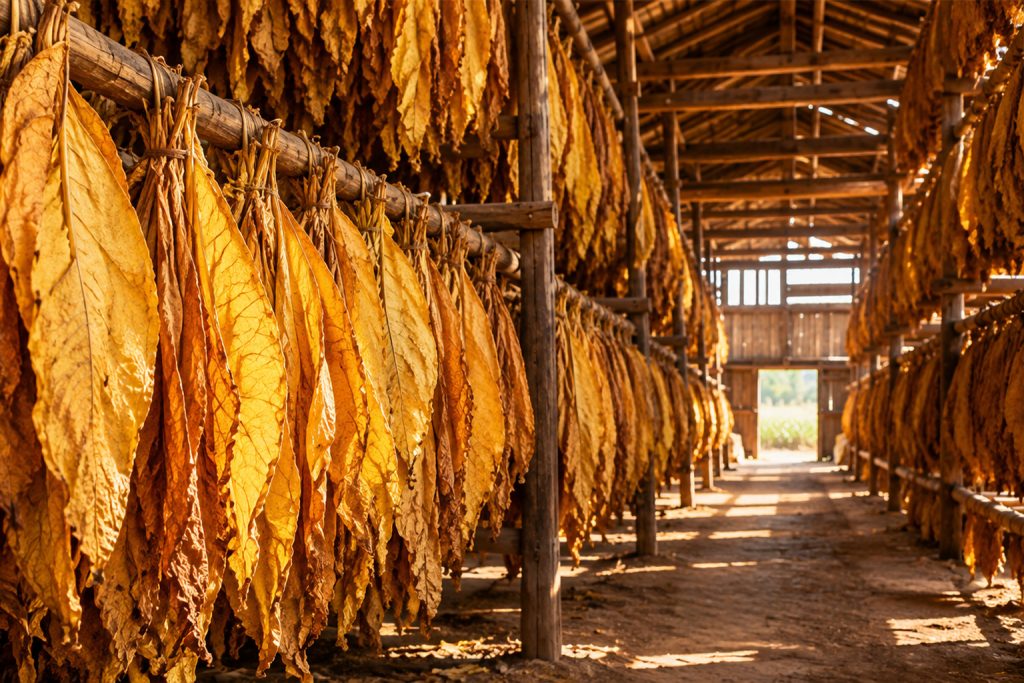
Virginia tobacco leaves are among the most widely traded tobacco varieties in the global tobacco industry. Known for their distinctive golden-yellow to orange color, natural sugar content, and characteristic aroma, these leaves play an important role in the production of various tobacco products. Their consistent qualities make them a significant agricultural commodity for manufacturers, processors, and international trading companies.
For businesses involved in tobacco sourcing and distribution, understanding the characteristics and quality standards of Virginia tobacco leaves is essential. Factors such as growing conditions, harvesting techniques, curing methods, and storage practices can influence the final product.
As an international trading business, Kalmand Trading Group recognizes the importance of product specifications, reliable sourcing, and professional communication in agricultural commodity markets.
What Are Virginia Tobacco Leaves?
Virginia tobacco is a variety of Nicotiana tabacum commonly associated with flue-curing, a controlled drying method that uses heated air. Although the variety takes its name from the US state of Virginia, it is now cultivated in several countries, including Brazil, India, China, Argentina, and the United States.
One of the defining characteristics of Virginia tobacco leaves is their relatively high natural sugar content compared with air-cured Burley tobacco. This characteristic contributes to their distinctive aroma and flavor profile.
Depending on the growing environment and processing conditions, cured Virginia leaves can range from light lemon-yellow to golden, orange, and deeper reddish-brown shades. Their physical characteristics and chemical composition vary according to the plant’s position, agricultural practices, and curing conditions.
These variations make careful product classification important for buyers seeking Virginia tobacco leaves for specific manufacturing requirements.
Key Characteristics of Virginia Tobacco Leaves
Understanding the main characteristics of Virginia tobacco helps buyers assess whether a particular grade meets their commercial specifications.
- Color and Appearance
Virginia tobacco leaves are commonly recognized by their bright, golden appearance after flue-curing. However, the exact color depends on leaf maturity, stalk position, and curing conditions.
Color uniformity can be an important consideration during visual inspection and commercial grading.
- Natural Sugar Content and Aroma
Virginia tobacco generally retains more natural sugars than Burley tobacco because of its distinctive curing process. This contributes to its characteristic aroma and relatively sweet flavor profile.
These properties make Virginia tobacco an important component in tobacco blending and manufacturing.
- Leaf Size and Texture
Leaf size, thickness, flexibility, and overall condition can vary between grades and origins. Buyers should evaluate these characteristics according to the intended manufacturing process rather than relying on appearance alone.
- Commercial Versatility
Virginia tobacco leaves are widely used in cigarette blends and other manufactured tobacco products. Their established role in international tobacco markets makes them an important product category for wholesalers, processors, and manufacturers.
How Are Virginia Tobacco Leaves Harvested and Cured?
The production process has a significant influence on the quality of Virginia tobacco leaves.
Harvesting at the Right Stage
Virginia tobacco is commonly harvested progressively, beginning with mature leaves near the bottom of the plant and continuing upward as the remaining leaves ripen. Appropriate harvesting practices help preserve leaf condition and support consistent curing results.
The Flue-Curing Process
After harvesting, the leaves are placed in specialized curing barns where heated air dries them under controlled conditions. Temperature and humidity management are essential throughout this process.
During curing, the leaves gradually change color, lose moisture, and develop their characteristic aroma and physical properties. Poorly controlled curing can negatively affect color, texture, and overall quality.
Grading and Preparation
Following curing, leaves are sorted according to characteristics such as color, size, stalk position, and physical condition. Depending on the buyer’s requirements, the tobacco may subsequently undergo additional processing, including stemming, conditioning, and packing.
These steps help prepare Virginia tobacco leaves for storage, transportation, and commercial distribution.
Quality Standards for Virginia Tobacco Leaves
For importers and wholesale buyers, quality assessment is a fundamental part of purchasing Virginia tobacco leaves. A clear understanding of product specifications helps reduce uncertainty and supports more efficient transactions.
Important evaluation criteria include:
- Leaf grade: Classification based on agreed commercial standards and intended use.
- Color consistency: Assessment of color variation within a lot.
- Moisture content: Verification that moisture levels meet the agreed specifications for storage and shipment.
- Physical condition: Inspection for excessive breakage, discoloration, mold, and other visible defects.
- Foreign matter: Examination for unwanted materials and contamination.
- Packaging quality: Confirmation that packaging is suitable for the product and expected transportation conditions.
- Documentation: Review of applicable product specifications, origin information, and export documentation.
Because quality requirements vary between manufacturers and markets, buyers should confirm specifications before placing an order.
Virginia Tobacco Leaves in International Trade
Virginia tobacco leaves are an established commodity in international agricultural trade. Their commercial value depends on factors such as origin, grade, crop conditions, processing quality, supply availability, and buyer requirements.
For international transactions, importers should also consider applicable customs procedures, product documentation, transportation arrangements, and destination-country regulations. Tobacco products are subject to specific legal requirements, which can differ considerably between markets.
Kalmand Trading Group can be positioned as a commercial partner for businesses seeking professional communication and organized trade coordination in agricultural commodity markets. For Virginia tobacco leaf transactions, clear specifications, transparent commercial terms, and appropriate documentation are important foundations for effective cooperation.
Buyers evaluating potential suppliers should request detailed product information and confirm that the proposed grade, packaging, and shipment arrangements meet their operational requirements.
How to Choose a Virginia Tobacco Leaf Supplier
Selecting an appropriate Virginia tobacco leaf supplier involves more than comparing prices. Businesses should consider product consistency, specification transparency, communication quality, and the supplier’s ability to meet agreed commercial requirements.
Before finalizing a purchase, buyers should clarify the required grade, origin, processing form, moisture specifications, packaging, quantity, delivery terms, and documentation.
It is also advisable to verify supplier credentials and applicable export permissions. For larger transactions, samples or independent inspections may help establish whether the product meets the agreed standards.
Working with a trading company that emphasizes clear communication and structured transaction management can help buyers coordinate sourcing and international purchasing more efficiently.
Conclusion
Virginia tobacco leaves remain an important agricultural commodity because of their distinctive characteristics, established manufacturing applications, and role in international trade. Their quality depends on multiple factors, including cultivation, harvesting, flue-curing, grading, and storage.
For wholesalers, manufacturers, and importers, understanding these factors is essential when evaluating products and selecting suppliers. By focusing on transparent specifications, appropriate documentation, and professional trade coordination, businesses can make more informed purchasing decisions.
Kalmand Trading Group aims to establish professional commercial relationships by emphasizing clear communication and organized trade processes. Businesses interested in discussing Virginia tobacco leaves and related trading requirements can contact Kalmand Trading Group to explore suitable commercial opportunities


